

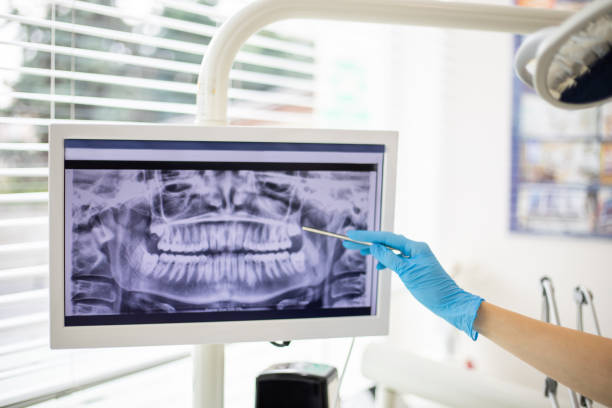
If you’ve ever looked at your dental X-rays and wondered what all those shades of black, white, and gray mean, you’re not alone. Dental X-rays provide valuable information that cannot be seen during a visual exam alone. They allow your dentist to detect problems early, monitor changes over time, and develop a treatment plan that supports your long-term oral health.
At Fernandez, DMD, we believe patients should understand their oral health and feel confident about the care they receive. Here’s a closer look at how to interpret dental X-rays and what your dentist is looking for during your appointment.
Why Dental X-Rays Matter
While your dentist can examine the visible surfaces of your teeth and gums, many dental issues develop below the surface. X-rays reveal tooth roots, jawbone, developing teeth, and areas of decay or infection that may otherwise go unnoticed.
Dental X-rays are commonly used to detect cavities between teeth, evaluate bone loss caused by gum disease, identify infections, monitor wisdom teeth, assess existing dental work, and help plan treatments such as dental implants, crowns, or root canals. Detecting these problems early often means simpler, less invasive treatment.
Understanding What You See
Dental X-rays use different shades to represent various structures in your mouth.
Dense materials, including enamel, fillings, crowns, and bone, appear white because they block X-rays. Softer tissues appear in shades of gray, while air spaces, such as the sinuses, appear black.
Your dentist studies these variations to identify abnormalities, monitor changes, and determine whether treatment is needed.
What Dentists Look For
One of the most common uses for dental X-rays is identifying cavities that cannot be seen during a routine exam. Tooth decay often appears as darker areas within the tooth structure, especially between teeth where visual inspections are limited.
X-rays also help evaluate the health of your jawbone. Healthy bone supports your teeth, while bone loss may indicate periodontal disease. Comparing current X-rays with previous images allows your dentist to monitor whether bone levels are stable or changing.
The roots of your teeth are another important area of evaluation. Dental X-rays can reveal infections, fractures, abscesses, and other problems beneath the gumline that may require treatment.
Your dentist will also examine existing fillings, crowns, bridges, implants, and root canal treatments to ensure they remain in good condition and are free from hidden decay or other concerns.
Monitoring Oral Health Over Time
Routine dental X-rays create a record of your oral health that allows your dentist to identify subtle changes over time. Small cavities, gradual bone loss, shifting teeth, or early infections are often easier to detect when current images are compared with previous ones.
This ongoing monitoring helps your dental team recommend treatment before problems become more serious.
Ask Questions About Your X-Rays
Don’t hesitate to ask your dentist to explain your X-rays during your appointment. Understanding what you’re seeing can help you feel more confident in your diagnosis and treatment recommendations.
You may want to ask if there are any signs of decay, gum disease, changes since your last visit, or concerns with existing dental work. Your dentist can walk you through the images and explain what they mean for your oral health.
Schedule Your Next Dental Visit
Dental X-rays are an essential part of preventive dental care. They help identify problems that cannot be seen during a visual exam, allowing your dentist to diagnose concerns early and protect your long-term oral health.
If you’re due for a dental exam or updated X-rays, Fernandez, DMD is here to help. We are located at 502 E. Olympia Ave., Punta Gorda, FL 33950, and can be reached by phone at 941-639-1124. Contact our office today to schedule your appointment and keep your smile healthy for years to come.