
For many patients, the thought of dental treatment brings to mind drills, injections, extensive procedures, and a long recovery. Modern dentistry is changing that experience. Advances in minimally invasive dentistry are giving dentists more ways to diagnose problems earlier, preserve healthy tooth structure, and treat certain dental concerns with smaller and more precise interventions.
Minimally invasive dentistry is not simply about using smaller instruments. It is an approach to dental care that focuses on prevention, early detection, preservation of natural tooth structure, and choosing the least invasive treatment that can effectively address a patient’s needs. New techniques and technologies can make certain procedures more comfortable while also helping patients recover more quickly.
At Fernandez, DMD, our goal is to provide personalized dental care while keeping patient comfort and long-term oral health at the center of treatment. Learn more about our dental services and the treatment options available in our Punta Gorda office.
What Is Minimally Invasive Dentistry?
Minimally invasive dentistry focuses on preserving as much healthy tooth and gum tissue as possible. Traditionally, treating a cavity could involve removing a relatively significant amount of tooth structure to create enough space for a filling. Today’s techniques can allow dentists to identify and treat some problems earlier, sometimes requiring considerably less removal of healthy tissue.
The philosophy also emphasizes preventing dental disease before more extensive treatment becomes necessary. Regular examinations, appropriate dental imaging, fluoride, sealants, good oral hygiene, and early treatment can all play a role.
This approach is especially valuable because natural tooth structure is something worth preserving. Once enamel or dentin is removed, it cannot naturally grow back. By identifying problems earlier and using conservative treatment when appropriate, dentists can help patients maintain their natural teeth for as long as possible.
Air Abrasion Can Offer a Quieter Alternative
One of the technologies associated with minimally invasive dentistry is air abrasion. Fernandez, DMD, offers air abrasion as an alternative approach for certain types of tooth decay and other dental procedures.
Instead of relying on the traditional dental drill, air abrasion uses a controlled stream of very fine particles to gently remove areas of decay. Because there is no conventional rotating drill involved, patients may experience less of the sound, vibration, and pressure that can make dental treatment uncomfortable or stressful.
Air abrasion can be particularly useful when treating smaller areas of decay or preparing a tooth for bonding or sealants. In some cases, it may reduce or eliminate the need for local anesthesia. However, it is not appropriate for every cavity. Larger areas of decay or certain existing restorations may still require conventional dental instruments.
You can learn more about how this technology works on Fernandez, DMD’s air abrasion and dental services page.
Tooth-Colored Restorations Preserve More of the Natural Tooth
Modern composite fillings are another important development in conservative dental care. Composite materials can be bonded directly to the tooth, which may allow the dentist to remove less healthy tooth structure compared with some traditional restoration techniques.
Fernandez, DMD uses composite fillings to restore teeth affected by decay while maintaining a natural appearance. Because the material is tooth colored, it can be carefully matched to the surrounding teeth.
The goal is not simply to fill a cavity. It is to restore the tooth while preserving as much of its original structure as possible. When decay is detected early, a smaller restoration may be all that is necessary.
Learn more about restoring decayed teeth with composite fillings at Fernandez, DMD.
Digital Imaging Helps Detect Problems Earlier
Early detection is one of the most important parts of minimally invasive dentistry. The earlier a dental problem is identified, the more opportunities there may be to treat it before it becomes larger or more complicated.
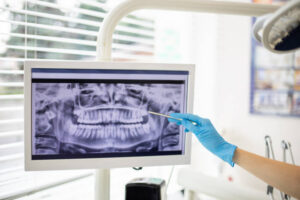
Digital dental imaging gives dentists a detailed look at areas that cannot be seen during a visual examination alone. X-rays can reveal decay between teeth, changes around tooth roots, bone loss, infections, and other conditions that may not yet be causing symptoms.
Modern digital technology can also help dentists compare images over time. A small change that might otherwise be difficult to recognize can become easier to monitor when current images are compared with previous ones.
Fernandez, DMD provides dental X-ray evaluations as part of comprehensive dental care. These images can help the dental team make informed decisions about whether a problem requires treatment or can simply be monitored.
The American Dental Association also recognizes digital imaging as an important part of modern dentistry, with applications ranging from evaluating dental caries and oral conditions to planning treatment. Learn more about digital dentistry from the American Dental Association.
Lasers Can Make Certain Treatments Less Invasive
Dental lasers are another advancement that can be used in certain minimally invasive procedures. Depending on the treatment and the type of laser being used, focused light energy can help dentists address specific soft-tissue concerns or periodontal problems with precision.
For patients undergoing appropriate periodontal treatment, laser therapy may help remove diseased tissue and bacteria while supporting the body’s natural healing process. Some patients may experience less discomfort and a shorter recovery compared with certain traditional surgical approaches.
Laser treatment is not automatically better for every dental condition, and it is not a replacement for all conventional dental procedures. The appropriate technique depends on the patient’s diagnosis, the extent of the problem, and the dentist’s clinical judgment.
Fernandez, DMD discusses laser therapy as one of the treatment options that may be considered for periodontal disease. Visit the practice’s periodontal treatment page to learn more about protecting your gums and supporting long-term oral health.
Dental Sealants Help Prevent the Need for More Extensive Treatment
Minimally invasive dentistry is not only about treating existing problems. Prevention is an important part of the philosophy as well.
Dental sealants are thin protective coatings placed into the grooves and pits of teeth, particularly areas that can be difficult to clean effectively. These grooves can trap food particles and bacteria, increasing the risk of decay. A sealant creates a protective barrier that can help prevent cavities from developing in susceptible areas.
According to the American Dental Association, sealants can help prevent and, in some situations, slow the progression of noncavitated decay in the pits and fissures of molars. Read the ADA’s information about dental sealants.
For patients who are good candidates, prevention through sealants may help avoid the need for a filling later. This is a good example of how modern dentistry can focus on protecting healthy tooth structure instead of waiting for a problem to become significant.
Digital Scanning and Treatment Planning
Digital dentistry has also changed how dentists evaluate teeth and plan certain treatments. Intraoral scanners can create detailed digital impressions of a patient’s teeth without the need for traditional impression materials.
These digital images can be used to evaluate the teeth and create precise treatment plans. Digital workflows can also support the design and fabrication of certain restorations, helping dentists plan procedures with greater precision.
The American Dental Association notes that digital technologies, including intraoral scanning, CAD/CAM systems, digital imaging, and 3D printing, are increasingly being incorporated into modern dental workflows.
For patients, the benefit is not necessarily that every treatment becomes shorter or simpler. Instead, digital tools can give the dental team additional information to make more precise decisions and create restorations designed around the individual patient’s anatomy.
How Minimally Invasive Dentistry Can Reduce Discomfort
One of the biggest advantages of minimally invasive techniques is the potential for a more comfortable treatment experience. When less healthy tooth structure needs to be removed, the procedure may be less extensive. Certain technologies, such as air abrasion, can also reduce the noise and vibration associated with traditional dental drills.
Early treatment can make an even bigger difference. A small cavity may require a relatively simple restoration, while untreated decay can eventually reach the inner portion of the tooth and require more extensive treatment, such as root canal therapy or a crown.
This is one reason routine dental examinations matter even when your teeth feel fine. Pain is not always the first sign of a dental problem. Regular visits give your dentist an opportunity to identify changes before they become larger issues.
Fernandez, DMD’s initial oral examinations include evaluations for decay, fractures, existing restorations, gum health, bite concerns, and other oral health conditions.
Can Minimally Invasive Dentistry Shorten Recovery Time?
Recovery depends on the specific procedure, the patient’s oral health, and the extent of the condition being treated. Minimally invasive techniques do not guarantee that every procedure will be painless or require no recovery. However, when a treatment can be completed with less disruption to surrounding healthy tissue, patients may have less postoperative discomfort and a faster return to normal activities.
For example, treating a small area of decay before it progresses can be considerably simpler than treating a severely damaged tooth. Similarly, conservative periodontal treatments may involve less tissue disruption than more extensive surgical procedures when a patient’s condition allows for a less invasive approach.
The most important factor is choosing the right treatment at the right time. Minimally invasive dentistry works best when combined with preventive care and early diagnosis.
Preserving Your Natural Smile
The central idea behind minimally invasive dentistry is simple: preserve what is healthy whenever possible. Today’s dentists have more tools and techniques available to detect problems early, remove decay more precisely, protect vulnerable teeth, and plan treatment with greater accuracy.
Air abrasion, tooth-colored composite fillings, digital imaging, dental lasers, sealants, and digital treatment planning are just some of the advances that can contribute to a more conservative approach to dental care. Not every technique is appropriate for every patient, but a thorough evaluation can help determine which options make sense for your individual needs.
If you have been putting off dental care because you are worried about discomfort, noise, injections, or a lengthy recovery, talk with your dentist about minimally invasive options. You may have more choices than you realize.
Schedule Your Visit with Fernandez, DMD
Taking care of a dental concern early can often mean simpler treatment and a better opportunity to preserve your natural tooth structure. At Fernandez, DMD, we take the time to evaluate your oral health, explain your options, and recommend treatment based on your individual needs.
If you are due for an examination, have noticed a change in your teeth or gums, or simply want to learn more about conservative treatment options, contact Fernandez, DMD to schedule an appointment.
Fernandez, DMD is located at 502 E. Olympia Ave., Punta Gorda, FL 33950. To schedule an appointment or speak with the office, call 941-639-1124.